Winter 1976 Season Anime
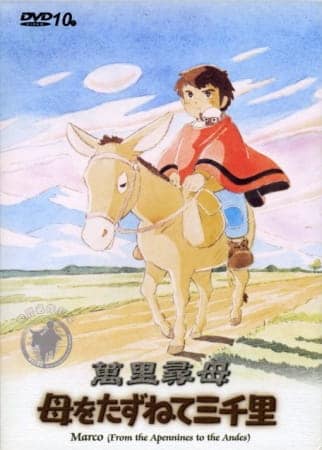
Based on a short section of the novel Cuore by the Italian Edmondo de Amicis, Marco is a young boy living in Genoa, Italy, together with his father Pietro. But the family is not complete, for Marco's mother left for Argentina around a year earlier in order to find work. Letters from her arrive regularly until one day they suddenly stop. Worry for his mother and what might have happened to her overcomes the young boy. Marco thus decides to embark upon a journey to Argentina in the hope of being reunited with his mother. At first, Pietro is opposed to Marco's plan, but moved by his son's enthusiasm, he eventually allows the boy to go. So begins Marco's long journey of the heart. Marco encounters many people throughout his travels, and finds maturity and self-acceptance as a result of his experiences. (Source: Nippon Animation)
Huckleberry no Bouken
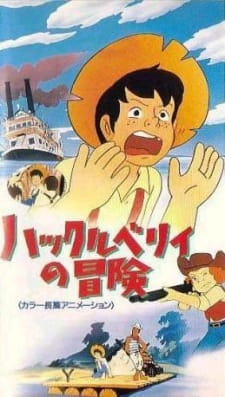
Based on Mark Twain's well known masterpiece about Huckleberry Finn, the bright and merry orphan, this film is full of life, laughter, and will be loved by children around the world. When Huckleberry runs away from his orphanage, he teams up with an escaped slave. Together, they travel the Mississippi on a raft, encountering all kinds of people and adventures. (Source: AniDB)
Manga Nippon Mukashibanashi (1976)
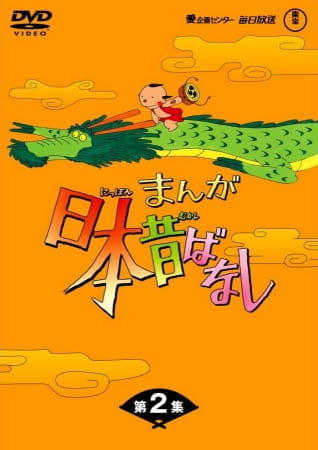
An omnibus-format TV series consisting of anime adaptations of Japanese folk tales, this is one of Japan's longest-running TV series, and Group Tac's second TV series (the first was The Road to Munich, a documentary anime about the 1972 Olympics). The governing rule of the series was that the creative staff change from episode to episode. While later other anime series like Nippon Animation's Famous Works of Japanese Literature would attempt the same, none would be as long-lived or successful. The rotation idea was that of director Sugii Gisaburo, a visual visionary unequaled in Japanese film history who has revolutionized anime several times in his career, be it in the 1967 TV series Goku's Big Adventure, in which he sought to shake anime free from the dominance of story development by yanking it back to a more cartoonish form, or The Belladonna of Sadness, where he broke the Disney full-animation mold, creating a full-length animated film in a completely new style that was a hybrid of still drawings and animation. The reason for rotating the staff each episode was so that each episode would have a completely different look and feel from its predecessor, and in this it was eminently successful. This is a series that is genuinely rewarding to watch, and is visually one of the richest in anime history. While this system also meant that quality varied, there were also occasionally superb episodes, as on the staff were many veterans like Group Tac founder SUGII Gisaburo himself, SHIBAYAMA Tsutomu, FURUZAWA Hideo, RIN Taro, and HIKONE Norio. Old episodes started being repeated more and more frequently as the years went on, and production of new episodes finally ceased completely in late 1995, but the series is still widely broadcast. (Source: Pelleas)